By Andia Chakava, Managing Partner, Afrishela
Africa is at a defining financial moment. Across the continent, pension funds collectively hold an estimated USD 1.4 trillion in assets, patient capital with the power to shape not just retirements, but the future of development itself.
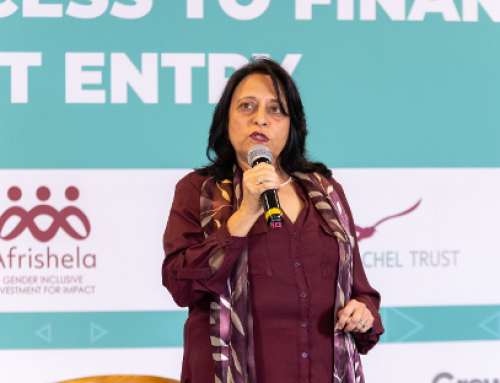
Speaking at the Pension Club International, I shared a simple but urgent proposition: pension funds are not development banks, but they can, and must, be strategic investors in Africa’s growth story. This is not a call for aid, but for partnership, discipline, and vision.
Money, meaning, and the lessons that shape us
Our relationship with money is often formed long before we manage it professionally. From earning my first income painting shops over the holidays, to experiencing the sting of being scammed as a student, to learning the discipline of paying down debt, each moment reinforced a powerful truth: ‘it is easy to lose money you didn’t make yourself, and harder, but transformative to grow what you earn with intention’.
These “money-defining moments” shape how we invest, how we assess risk, and how we think about value beyond returns.
What smart investing really requires
At its core, sound investing rests on a few fundamentals:
- Liquidity matters, especially when life happens.
- Diversification is broader than geography, it spans asset classes, sectors, and currencies.
- Risk is not optional if we want to beat inflation and preserve purchasing power.
- Professional management and governance are non-negotiable.
- And increasingly, investments can, and should, create shared value.
This is where wealth management begins to evolve into something more ambitious.
From managing wealth to creating it
“I started my career in wealth management,” I often say, “but I will end it in wealth creation.”
Wealth management traditionally serves those who already have capital. Wealth creation focuses on helping people and businesses generate it in the first place. In Africa, this distinction matters deeply.
Our continent is young and restless. Most businesses operate informally. Women dominate the micro and small enterprise sector, often relying on savings groups, retained earnings, and limited networks. Capital is expensive, and access is uneven. Yet this is precisely where opportunity lies.
Unlocking pension capital for real-economy impact
Infrastructure, affordable housing, renewable energy, SMEs, these are not abstract development themes. They are the backbone of jobs, dignity, and long-term growth.
Pension funds have a fiduciary duty to meet future liabilities. With 10-year government bond yields hovering around 13% in Kenya and 16% in Uganda, alternative investments must compete on a risk-adjusted basis. This is why de-risking mechanisms matter, from guarantees and blended finance to first-loss capital and co-investment structures.
Done right, these tools allow pension capital to flow into productive, unlisted assets without compromising prudence.
What we look for when investing in entrepreneurs
Capital alone is not enough. We assess:
- Founder background and track record as a proxy for execution.
- Skin in the game, including personal capital and early crowd-in.
- Scalability and impact, especially job creation and inclusion.
- Use of funds, with a focus on governance, growth, and resilience.
Pairing non-dilutive capital with technical assistance creates investment-ready pipelines that can safely absorb institutional funding.
Redefining impact and protection
Impact is not a buzzword. It is about:
- Jobs that pay more than a living wage
- Meaningful youth integration
- Gender-diverse and inclusive businesses
- Climate adaptation and locally grounded innovation
At the same time, wealth must be protected through insurance, trusts, and thoughtful estate planning, and shared through acts of giving that extend beyond our immediate circles.
Investing without running the business
The future we are building is one where investors participate in growth without running enterprises, where pension funds own stakes in the real economy, and where local, patient capital supports local entrepreneurs earning in local currency.
As I concluded at Pension Club International: “We must not borrow our future. Pension funds can and should drive Africa’s development agenda, sustainably and inclusively.”
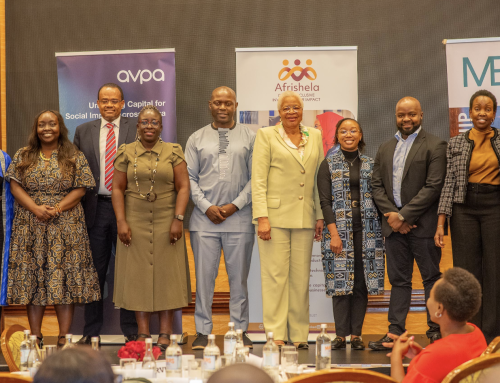
Remarks were made on December 10th at Nairobi Club hosted by Pension Club International | Kenya | Investment Planning which is promoted by CPF Foundation | Fulfilling lives |