With flexible capital and hands-on support from Afrishela, Welo Health is expanding healthcare access while creating income opportunities for women nurses.
For many working people, seeking healthcare can come with an impossible choice: lose a day’s income while you spend hours waiting in a queue at a hospital or clinic, or put care off until you are really sick, leading to other problems.
Zanele Abraham-Matome founded Welo Health during the COVID-19 pandemic in 2020, after seeing how easily healthcare can become out of reach for working people. The South African healthtech startup brings digital health solutions together with on-site human care, using technology and a network of nurses to make services such as virtual doctor consultations, medication delivery and health check-ups easier to access at work and at home.
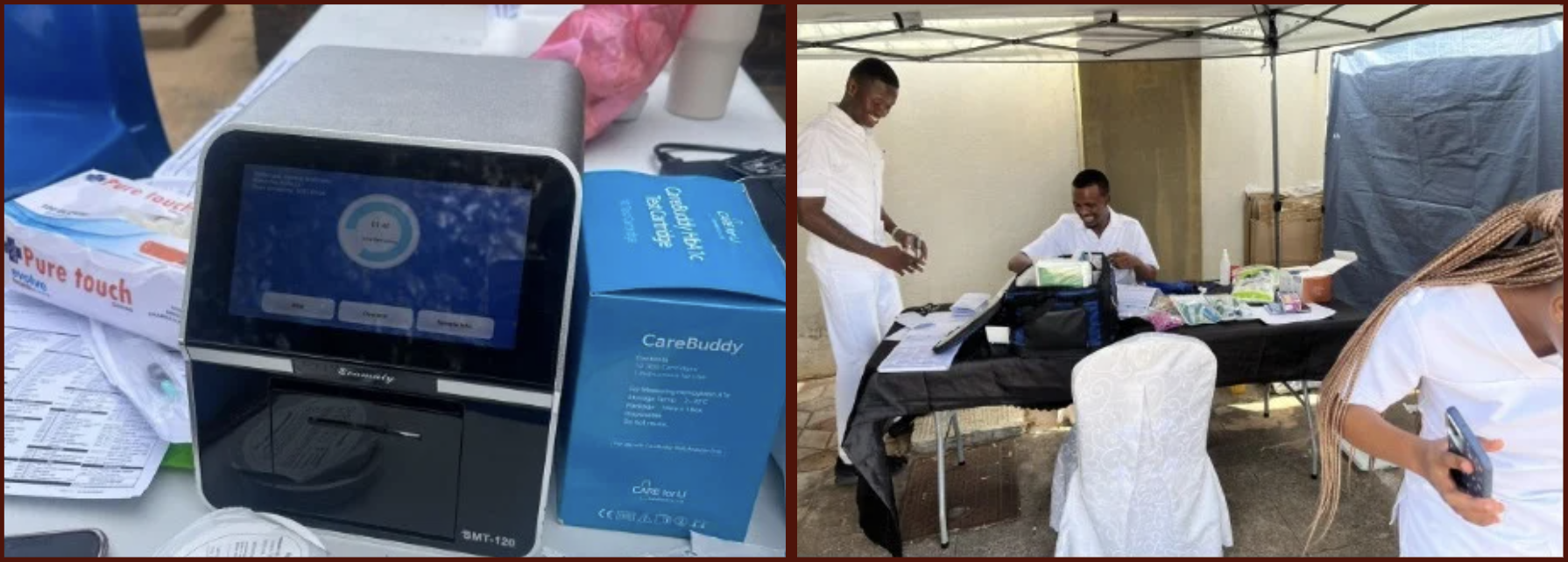
Care closer to where it is needed: An on-site blood-testing analyser and nurse-led screening station support Welo Health’s approach to making timely, accessible healthcare available in workplaces and communities.
Today, Welo Health provides on-site and at-home healthcare, helping people access support in real time rather than waiting until a health concern becomes more serious. For Zanele, the work has always been about more than convenience. It is about creating a healthcare model that respects people’s time, circumstances and right to be treated with care.
“Dignity is employee healthcare at home and in the workplace. Patients get care in real time and in a dignified manner.” – Zanele Abraham-Matome.
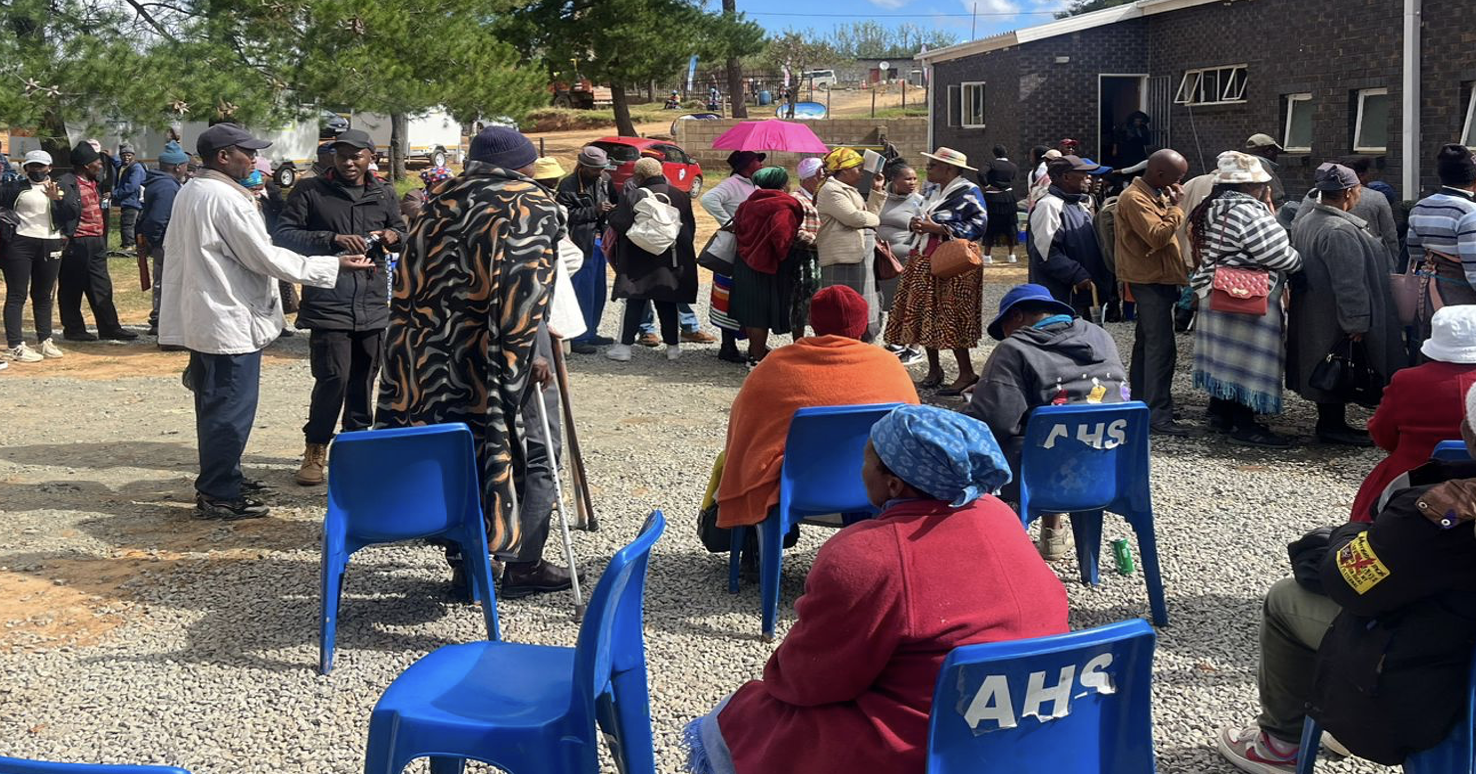
Building care around people: Community members arrive for health screening services delivered closer to where they live, helping make essential care more accessible, timely and dignified.
Welo Health’s model is powered by nurses who deliver on-site clinical and wellness services in workplaces and communities, supported by a scheduling and patient-management platform that helps coordinate care and follow-ups. Zanele now leads a team of 10 full-time employees, 60 per cent of whom are women, and works with a wider network of 95 active gig nurses. That network has become one of the clearest signs of Welo Health’s growth and purpose: 90 of the 95 active nurses are women, creating income opportunities while expanding access to care. “It feels really good being a job creator. It fills me with a sense of purpose and impact,” Zanele said.
That purpose is also felt by the women nurses who make the model possible. Many work through Welo Health’s flexible, on-demand network, creating additional income opportunities while delivering essential services to people who may otherwise struggle to access care.
“Our nurses are the engine that scales our growth. We aim to ensure their right to earn more and impact their communities is not overlooked.” – Zanele Abraham-Matome, Founder, Welo Health.
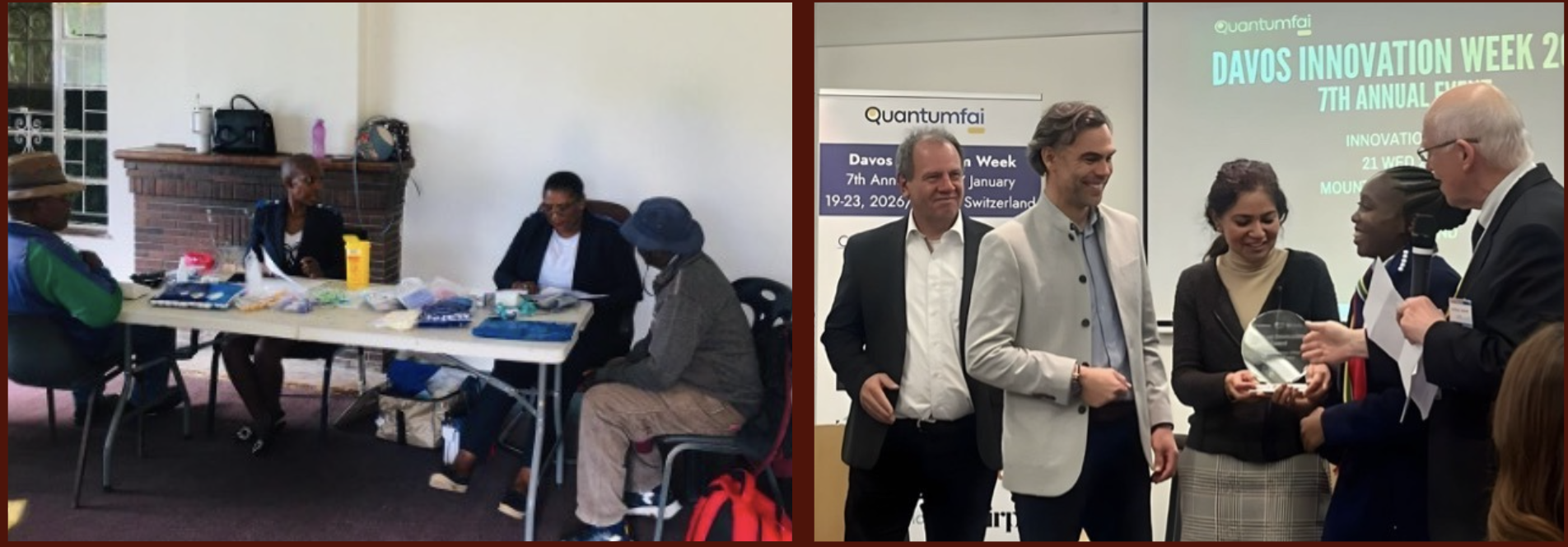
Care in action and innovation recognised: Clinical consultations underway during a Welo Health site visit, bringing essential healthcare services closer to the people who need them (left). Welo Health is recognised at Davos Innovation Week 2026, reflecting its growing contribution to African healthtech innovation and more accessible, people-centred care (Right)- Photo credit: NextAfrica Magazine.
Afrishela’s US$100,000 investment in Welo Health was structured as a revenue-based loan: flexible, non-dilutive capital designed to support growth without requiring Zanele to give up ownership of the business she built.
For Zanele, a woman founder building in a sector where quality, trust and compliance are essential, Afrishela’s flexible funding structure mattered deeply. “This partnership with Afrishela is more than just capital,” she said. “It is a vote of confidence in women-led innovation in healthcare.”
The funding has given Welo Health room to deepen its technology offering, reach more employees who are often excluded from traditional workplace healthcare arrangements, and prepare for its next stage of growth.
Afrishela’s support extends beyond finance. Through mentorship and investor-readiness support, the team is working with Welo Health to strengthen the systems needed for future capital raising and market expansion.
“The mentorship and investor readiness we have received from Afrishela puts us in good stead for our future raise.” – Zanele Abraham-Matome, Founder, Welo Health.
Welo Health is expanding Healthcare at Home and on-site clinical services for underserved communities like ex-miners, with operations expanding to Lesotho and Botswana, bringing healthcare services closer to people with limited access.
“Post-Afrishela, two wins we are proud of are the six-country rollout of Healthcare at Home for ex-miners, and reducing nurse payments from 14 days to seven,” Zanele said. “Scale and dignity, together.”
Andia Chakava, Managing Partner at Afrishela, described this as the kind of capital women founders need:
“Capital designed for women founders is responsive and tailored to the needs of women-owned and led enterprises. It is patient enough to allow catalytic growth, and it recognises that women entrepreneurs often need capital wrapped with technical assistance support.” – Andia Chakava, Managing Partner, Afrishela.
Scaling healthcare is not simple. For Zanele, one of the hardest parts has been ensuring that Welo Health continues to meet changing compliance requirements while building strong data-governance systems that protect the people it serves.
“We want to focus more on the data aspects and how we use AI to move data into an intelligent layer that will enable preventative care at scale.” – Zanele Abraham-Matome, Founder, Welo Health.
Jane Mbinya, Senior Investment Officer at Afrishela, said Welo Health’s progress reflects more than revenue growth. The business demonstrates the qualities investors look for in an early-growth company: strong margins, a scalable technology platform, market expansion potential, capable leadership, and measurable impact.
“Welo Health is demonstrating execution adaptability and resilience. Women-led businesses like Welo Health deliver measurable impact through women’s leadership, job creation and the communities in which they operate.” – Jane Mbinya, Senior Investment Officer, Afrishela.
Welo Health is not only growing a company; it is also building a community. It shows what becomes possible when women founders are trusted with capital, supported with the right expertise, and given room to build solutions that improve lives.